Product Overview
Product Name
JA Solar Nebula, usually refers to JA Solar "Smart Energy Operation Management Platform" or "Smart Energy Management System" or "JA Solar Nebula APP".
Product Positioning
The positioning of the cloud platform is a one-stop comprehensive energy management platform, focusing on providing efficient, intelligent, and safe energy management services for distributed energy and energy consumers. Leveraging cloud computing and IoT technologies, JA Solar Nebula can provide comprehensive operation monitoring, fault warning, remote control, and energy optimization support services for distributed energy devices, reducing the workload of O&M personnel, lowering operating costs, and helping users maximize revenue through peak-valley price differences and demand regulation.
Application Scenarios
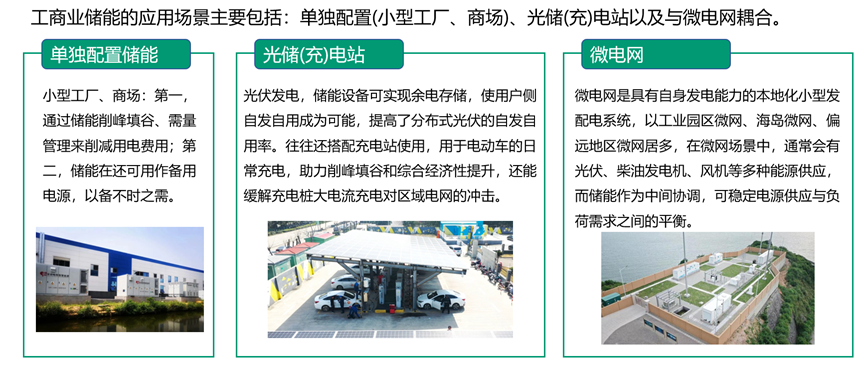
Focusing on industrial and commercial application scenarios, covering independent energy storage, PV-storage integration, PV-storage-charging integration, and microgrid stations, etc.
Standards and Specifications
Monitoring functions meet the requirements of "Code for Design of Electrochemical Energy Storage Station" (GB51048—2014), etc. The monitoring scope includes energy storage batteries, energy storage converters (PCS), measurement and control devices, etc. Battery information includes battery cells, battery PACKs, battery clusters RACKs; energy storage converter (PCS) information includes PCS operating status, voltage, current, active power, reactive power, etc. a) "Code for Design of Electrochemical Energy Storage Station" (GB51048—2014). b) National Energy Administration, General Department. Notice on Strengthening Safety Operation Risk Monitoring of Electrochemical Energy Storage Stations on the Power Generation Side and Grid Side [EB/OL].[2023-11-07].. c) GB/T 42313-2023. Terminology of Electrical Energy Storage Systems [S].
Terminology
Please refer to the following table for the specific meanings of relevant terms, definitions, and abbreviations involved in this document:
| Abbreviation | Meaning Description |
|---|---|
| EMS | Energy Management System |
| SCADA | Supervisory Control And Data Acquisition |
| PCS | Power Control System |
| BMS | Battery Management System |
| BMU | Battery Management Unit |
| BCMU | Battery Control Management Unit |
| BAMS | Battery Array Management System |
| DI | Digital Input |
| DO | Digital Output |
| UPS | Uninterrupted Power Supply |
PCS (Power Conversion System): Realizes the conversion of electric energy between the power grid and the battery, and monitors and manages the exchange process. It can control the charging and discharging process of the battery, perform AC/DC conversion, and can directly supply power to the AC load in the absence of the power grid. PCS consists of DC/AC bidirectional converters, control units, etc.
BMS (Battery Management System): Mainly used for monitoring, calculation, communication, and protection of battery packs. It mainly consists of battery management chips, analog front ends, embedded microprocessors, and embedded software.
EMS (Energy Management System): Can realize real-time monitoring and intelligent management of various devices in the system. Realize data collection, storage, processing, uploading, operation control, operation strategy formulation, etc., and perform overall information monitoring and management.
Four major revenue sources for C&I energy storage:
- Peak Shaving and Valley Filling: Utilize the peak-valley electricity price difference to charge during valley and flat periods and discharge during peak and tip periods to reduce enterprise electricity costs. (Currently more than 90% of revenue sources)
- Balancing Demand Electricity Fees: The energy storage system can perform peak shaving and valley filling, eliminate peak loads, smooth the electricity consumption curve, and reduce demand electricity fees.
- Dynamic Capacity Expansion: The user's transformer capacity is fixed. Generally, when the user needs the transformer to be overloaded during a certain period, transformer capacity expansion is required. After installing a matching energy storage system, the energy storage can discharge during this period to reduce the transformer load, thereby reducing the capacity expansion and transformation costs of the transformer.
- Demand Side Response: After installing the energy storage system, if the grid issues a demand response, the customer does not need to limit power or pay high electricity fees for that period. Instead, they may participate in demand response transactions through the energy storage system to obtain additional compensation fees.